

The Iran war, like no other recent event, has exposed the pitfalls of the world’s over-reliance on maritime trade routes. The dysfunctionality of the Strait of Hormuz, on account of the war, has generated a major crisis across the globe in the domains of energy, food, health security and much more.
In fact, the effective closure of the strait of Hormuz is threatening the onset of a global recession. The possibility of a third world war has also appeared on the radar.
The crisis in the Strait of Hormuz, has generated several unintended consequences. But from a geopolitical perspective, it has, most significantly, penciled the prime importance of overland Eurasian trade routes. In other words, the Hormuz crisis has highlighted the importance of continental over the maritime routes. Given the ongoing geopolitical flux, this focus on the continental over the maritime may only sharpen in case ongoing conflicts cascade, and other choke points such as the Strait of Malacca are exposed.
Amid the geopolitical flux, Russia and India are well positioned to drive a new Eurasian corridor geometry. Geography also dictates that the other naturally positioned load bearing beams of these routes must include Iran, Afghanistan, Azerbaijan, Armenia, Turkmenistan, Kazakhstan and China. If these corridors are completed in the coming decades, they can connect the Indian Ocean, Caspian Sea, Black Sea, the northern Pacific, the Arctic Ocean and the northern Atlantic with giant rail and road corridors. In turn they will spur new growth engines of the global economy with Eurasia at its heart.
Map:
Central to the continental trade route architecture is the International North South Transport Corridor or more realistically, as it evolves, the INSTC+.
Starting from Mumbai, it has five radials and three primary hubs—India, Iran and Russia.
From Mumbai, the INSTC heads to Iran. This is a pivotal state from where five offshoots of the INSTC+ radiate.
Two of them head from the Indian Ocean/ Arabian Sea port of Chabahar. Both go north from Chabahar, with Zahedan in Iran as the fulcrum. Zahedan, in fact, is the junction from where the INSTC, according to plan, would branch out.
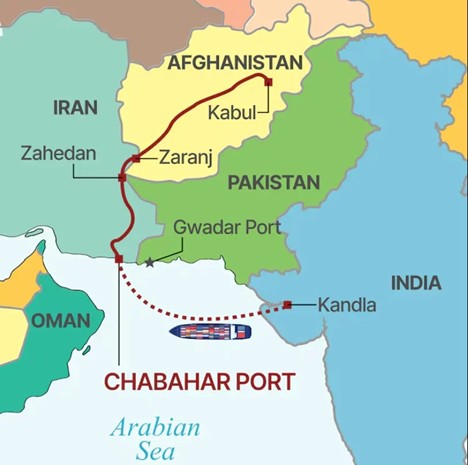
Once the railway construction to Zahedan is complete, one spur riding on the Iranian railway system would head northwest to Mashshad, from where the railway would fuse with the old Soviet railway system moving west into Turkmenistan and Kazakhstan before joining the Russian railway system heading to Moscow and St. Petersburg.
Since early 2026, the Chabahar–Zahedan railway has entered its final construction phase, with 96% of substructure done, 75% of track laid, and several stations nearing readiness.
According to Iran’s Construction & Development of Transportation Infrastructure Company (CDTIC), earthworks, tunnels, bridges, and embankments are almost complete.
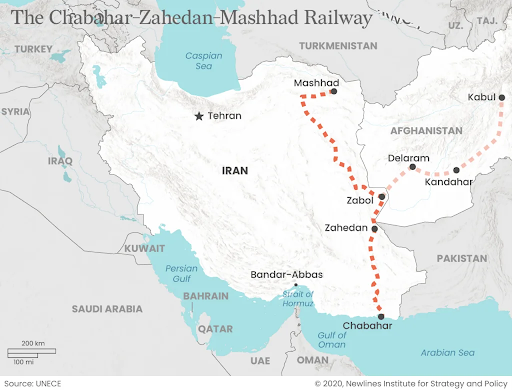
From Zahedan, another route would head north into Afghanistan and then west after crossing the Amu Darya to Uzbekistan and Russia via Kazakhstan. Inside Uzbekistan, the transit will cover Termez, Samarkand and Tashkent before entering Shymkent in Kazakhstan. Cargo on this route can then enter Russia’s Chelyabinsk region and connect with the Trans-Siberian railway and Russia’s north-south transportation spine.
Three other INSTC hubs in Iran are Bandar Abbas at the Persian Gulf, Bandar Anzali on the Caspian and Agarak/Meghri at the Iran-Armenia border.
The main INSTC shaft from Bandar Abbas heads north to Bandar Anzali on the western side of the Caspian. Containers from Bandar Anzali can then be shipped to Astrakhan, Olya and Makhachkala–the only Russian port on the Caspian that does not freeze in winter– en route Moscow and St. Petersburg.
Because the Caspian can remain frozen for significant periods in winter, two other alternatives have been envisaged. One is the Qazvin Rahsht railway in Iran, which will be connected to Astara, a city on either side of the Iran-Azerbaijan border. The railway then heads towards Baku, then the Black Sea ports of Batumi and Poti in Georgia.
The Qazvin-Rasht section was completed in March 2019. The Rasht-Astara section is under construction, with all financial bottlenecks cleared after Azerbaijan’s $500 million commitment and allocations in Iran’s national railway budget.
This route can can also branch to Moscow following the Astara (Azerbaijan) , Baku, Yalama, Russia (Derbent) track.
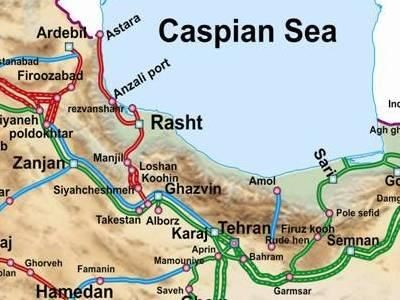
This route is open all round the year, avoiding the limitations of the frozen Caspian Sea. However, this passage could get impacted if the Azerbaijan-Iran relations sour.
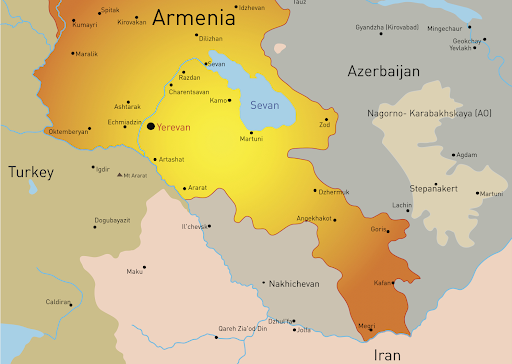
To avoid this geopolitical contingency, the INSTC has another spur from the Iranian border city of Agarak to Armenia’s Meghri. This passes through the Meghri corridor, heading north to the Black Sea via Georgia. Though it offers an option, the passage is narrow and landslide prone. Besides, it is vulnerable with Azerbaijan straddling the Meghri corridor. The danger to its viability is real because the Azeris have threatened to establish and control the east-west Zangezur corridor linking the both sides of Azerbaijan, and blocking Iran access across the Meghri corridor towards the north.
Once it terminates in St. Petersburg, the INSTC can connect with the trans-Siberian railway and head to Vladivostok–a great Russian city on the shores of the Sea of Japan.
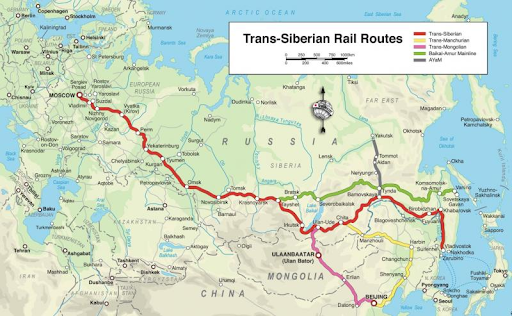
Vladivostok is the springboard for two other complementary maritime routes. Going South, it is the starting point of the Vladivostok to Chennai maritime corridor or the eastern maritime corridor,
Going north, it heads towards the Northern Sea Route (NSR) lies roughly 2,800–3,200 km away, depending on the chosen entry points. There are three gates to the NSR.
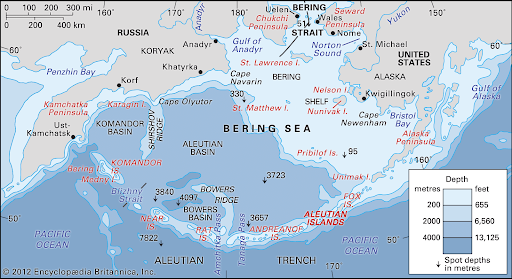
First is the Vladivostok Bering Strait passage or the Eastern NSR Gate. This 2800 kilometer route passes through Kamchatka, Anadyr Gulf and the Bering Strait.
The second route is 2,900 kilometers long. It heads from Vladivostok to Cape Dezhnev, located at the eastern tip of Chukotka facing Alaska.
The third route is 3,200 km long. From Vladivostok, it heads to Pevek, the first major Arctic port. Pevek is Russia’s northernmost town and a key NSR node. The third route is 4,800 km long. From Vladivostok, it heads to Tiksi (central NSR node).
Given the added importance of continental routes, it is vital that India, Russia and Iran as the core to selectively engage the Central Asian Republics, depending on the pain points, work together based on clear principles and contingencies.
There are at least five areas and choke points that require collective action.
First, Chabahar and the Zahedan axis need to be protected especially from terrorists, drug pushers, gun runners and insurgents. Bandar Abbas, a key node of the INSTC also needs to be safeguarded under a new security arrangement.
The third area of vulnerability is the Iran Azeri border areas, especially the Adarak-Meghri junction that leads towards Georgia along the Meghri corridor and the Azeri leg of the INSTC heading to Derbent in Russia. This would require deft diplomacy that illuminates the joint geoeconomic gains based on trade commerce in a manner that outweigh the political differences. Here, the key players are not only Russia, India and Iran but also Middle powers including Azerbaijan and Turkey with Israel lurking in the shadows.
In order to impart stability, China would also have to come into the picture. There are several points of intersection between INSTC+ and the China-Central Asia-Iran freight corridors that starts from Xian in China to Tehran in Iran.
However, a major impediment to the INSTC and China’s Belt and Road Initiative (BRI) is the friction between India and China, which hampers the collaboration between the two Asian rising powers. Overcoming this challenge through a positive bilateral engagement, led by Prime Minister Narendra Modi of India, Chinese President Xi Jinping and backed by his Russian counterpart Vladimir Putin would be essential to normalise India-China ties. If this happens, a number of routes from India to China directly linking Indian transport corridors via the Tibetan plateau as well as through Nepal open up that will link up with the evolving INSTC+ and BRI routes across the Eurasian landmass.
In the years to come, Eurasian corridor security will demand a Russia, India, Iran and China (RIIC) core as the guarantor of the continental routes, whose importance is only likely to grow after the Hormuz crisis, which may have a ripple effect on other maritime chokepoints including the strait of Malacca.
* Atul Aneja is a veteran journalist specializing in foreign affairs. He is the former Editor of India Narrative website, and Strategic Affairs Editor of the Hindu newspaper
