Amid interruptions of energy flows from the Strait of Hormuz, unsafe transit through the Bab Al Mandab–a chokepoint linking the Red Sea with the Indian Ocean–and question marks over the reliability of Suez canal route - China has officially started shipping cargoes along the icy Northern Sea Route (NSR).
China’s Sea Legend Shipping launched the first-ever regular container service through the NSR on August 15.
The ship, Dubai Tower, began its 20-day voyage from Ningbo Zhoushan Port, a Chinese deep water port along the eastern coast, to Felixstowe (UK) .
But China is the only country that can visualise the NSR’s promise.
On August 22, South Korea also dispatched PanStar Acro, its first trial vessel across the Arctic to Europe.
India too is wide awake to the trade opportunities that the NSR presents. In fact, India is preparing to send its first pilot cargo vessel through Russia's Northern Sea Route next year , to test the Arctic corridor as a seasonal alternative for European trade.
“In 2027, we are planning to have the first pilot vessel running through the Northern Sea Route. We are seeing huge possibilities," an Indian official speaking at the Arctic-Regions Forum in Arkhangelsk, Russia, on Aug. 13 was quoted as saying.
During its voyage, the Dubai Tower, marshalled by China’s Sea Legend Shipping will also dock in Rotterdam (Netherlands), Hamburg(Germany) and Gdynia (Baltic). The transit time of 20–21 days is nearly half of what it would take to reach Europe via the Suez Canal. In total, the NSR is a 5,000 km passage along the Arctic coast, making it the shortest maritime route between Northeast Asia and Western Europe.
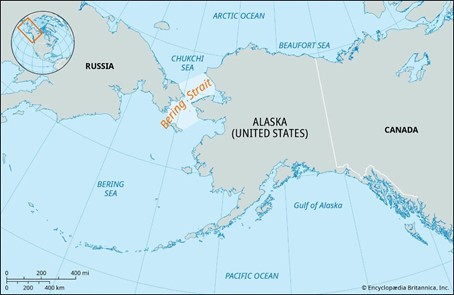
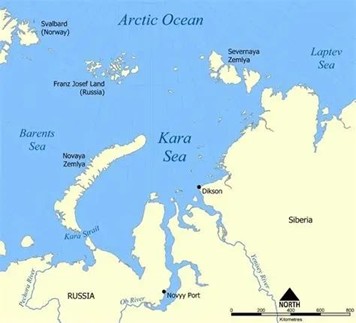
On its way sailing north along the Pacific, the ship will pass through the Bering Strait, enter the Chukti Sea in the Arctic Ocean and officially join the NSR. The route will extend west to the East Siberian Sea, Laptev Sea and Kara Sea, ending at the Kara Strait, where it will enter the Barents Sea and then Europe.
In general ships using this route enter the Barents Sea and after exiting the Arctic Sea, they enter the North Atlantic after joining the Norwegian Sea. From here Europe bound ships can access Rotterdam, Hamburg, Gdynia, Felixstowe and Antwerp.
The Sea Legend’s 2026 program includes eight sailings between Aug 12–Oct 27. Apart from Dubai Tower, the fleet includes Riyadh Mukaab, Athens Odeon, Istanbul Bridge, and three Tiger‑class vessels.
Ningbo, is the collection hub of cargo fed by six feeder services radiating from Shanghai, Dalian, Fuzhou, Nansha, Qingdao and Taicang.
China is marketing the NSR as a seasonal alternative to Suez Canal and rail. It is also labelling the new oceanic line as environment friendly, because it generates 50% lower CO₂ emissions. Linking it as part of its Belt and Road Initiative (BRI), the Chinese are labelling the route as an expansion of China’s Polar Silk Road expansion.
With temperatures ranging from −3°C to 10°C, the Chinese view the new route as a natural cold chain, allowing shipment of sensitive and perishable cargo.
Though China has already surged ahead, South Korea has is going into details of using the Arctic route in the near future.
As part of the preparations, the PanStar Acro departed from Busan New Port, which appears to have been identified of Korea’s maritime outreach through the Arctic.
The South Korean ship carrying a 837 TEU cargo will pass through Kamchatka, Bering Sea and then following the NSR will dock at Felixstowe, Rotterdam and Gdansk to cover its 40-45 days roundtrip. The pioneering voyage is supported by
ROK’s Ministry of Oceans and Fisheries, the Korea Ocean Business Corporation and Korea Shipowners’ Association demonstrated Seoul’s significant interest in the Arctic venture.
Besides, India is also showing deep interest in the NSR, especially after the reliability of legacy trade routes has been called into question.
Consequently, the Indo-Russian dialogue on the NSR has reached an advanced stage.
A Russian official exclaimed earlier this week that India is among the countries holding the "most productive" talks with Russia for cooperation in the Arctic region
"The most productive dialogue is taking shape with China and India, which not only demonstrate interest in the Arctic agenda but also possess extensive resources for implementing joint projects and initiatives in this area," Vladislav Maslennikov, Director of the Department of European Problems at the Russian Foreign Ministry, was quoted as saying.
The seeds of India’s outreach towards the NSR were sown during Indian Prime Minister Narendra Modi’s highly consequential visit to Vladivostok for the Eastern Economic Forum in 2019.
It was during that visit that Modi announced a $1 billion seed fund for India’s investment in the Russian Far East–an initiative that in later years evolved into a deeper appreciation of the NSR’s potential.
In fact, it was during his Vladivostok visit that Modi unveiled India’s Act Far East policy, making the bold declaration that the Russian Far East added a new and powerful engine to India-Russia strategic partnership.
Much of India’s outreach to the Russian Far East is about connectivity, both maritime and continental, resource access, including energy and rare earths, and human resources exports.
Determined to build alternative supply chains, especially in an era of geopolitical uncertainty, spotlighted by the crisis in West Asia–India’s primary sources of energy– New Delhi and Moscow are focusing on the Eastern Maritime Corridor (EMC) or the Vladivostok to Chennai oceanic route.
Russian and Indian officials continue to describe the route as being in an operationalisation phase, rather than a fully normalised liner service.
From a geoeconomic perspective the EMC makes complete sense.
The route spanning 10,300–10,500 km, can be covered in 18-24 days, nearly half the transit time when compared with the traditional India-Russia trade route via Europe/ Suez that takes 35-40 days.
Coal shipments through the corridor rose by a massive 87% in FY 2024–25, while crude oil volumes rose 48% in the same period.
While this is no doubt a promising beginning, trade sources reportedly estimate that a traffic of about 100 containers per week would be required to sustain a dedicated scheduled vessel service between Chennai and Vladivostok, indicating that the corridor is still building the cargo density required for a regular liner network.
But, overtime, these volumes may not be hard to achieve, with India and Russia targeting a $100 billion dollar trade by 2030, riding on the EMC as a key logistics enabler to achieve that objective.
In fact, the volumes along the Vladivostok to Chennai route–a less celebrated node of India’s Indo-Pacific strategy –can be expected to rise exponentially as New Delhi begins to tap the vast resources of the Russian Far East, and then of the Arctic.
Regarding the Russian Far East, India, in the first phase of engagement, is focusing on tapping the region’s energy resources–coking coal, oil and LNG.
But in the longer run , other commodities are also on the radar within the Act Far East framework . These include critical minerals, rare earths, mining projects, as well as agriculture and food processing.
This is not surprising as, according to estimates by Russia’s Ministry of Natural Resources, Russia possesses 28.5–28.7 million tonnes of rare-earth metal reserves.
Of these, the Far East hosts some of Russia’s most important undeveloped deposits, particularly in Yakutia (Sakha Republic).
Specifically, Russian officials have identified Tomtor (Yakutia) as one of Russia’s biggest proven rare-earth deposits.
Besides rare earths, the Russian Far East is a powerhouse of a strategic minerals basket.
These include gold, nickel, copper, tin, zinc, diamonds, as well as oil and gas. In fact, according to some estimates, the Far East produces 98% of Russia’s diamonds, about 50% of gold, 40% of Russia’s fish and seafood and roughly one-third of Russia’s coal reserves.
From an Indian perspective, access to Russian rare earths can help solve the problem of producing EVs, magnets, electronics and defence equipment. Nickel and copper will be gold dust to produce en masse, batteries, and foster electrification, while coking coal would be a boon for cost-effective production of steel. Oil/LNG will, in turn, ensure reliable energy security.
India’s focus on the Northern Sea Route (NSR) is an extension of its outreach to the Russian Far East and more.
In their joint statements after Russian President Vladimir Putin’s visit to India in December last, New Delhi and Moscow have stressed their intent to integrate the NSR with wider connectivity initiatives such as the EMC and the International North South Transport Corridor (INSTC)–a giant 7200 kilometer route that connects Russia, Iran and India.
As part of their massive connectivity grid, India and Russia have designated a specific role for the NSR. Essentially, with Vladivostok as the hub, the NSR extends the EMC northwards.
Besides, this is a futuristic initiative that is expected to benefit from the Arctic’s vast mineral wealth. With the polar ice caps melting, these resources can be exported to Europe along a much shorter route, or southwards towards the Pacific via the EMC.
With an eye on the future, Indian seafarers, in parallel, are heading to Russia for training in polar waters.
This is expected to include polar navigation, Arctic shipping and NSR operations.
The Russian Maritime Training Institute named after Admiral G.I. Nevelskoy, located in Vladivostok, has been earmarked as the venue for this training.
This facility is known for simulator-based training, apart from serving as an incubator for developing Russia’s broader NSR plans. That makes the university a logical training hub for mariners who may eventually work on Arctic cargo shipping, ice-class vessels and Northern Sea Route logistics. From an Indian perspective, the university can train a pool of Indian seafarers qualified for high-latitude operations.
The India-Russian maritime ecology focused on the Russian Far East and the Arctic includes proposals for building ships and ship-repair clusters in India as well. Russia has apparently proposed setting up shipbuilding hubs in Mumbai and Chennai. This possibility was reportedly conveyed by Nikolai Patrushev during discussions preceding the Modi–Putin summit.
According to a report, the clusters would work on fishing vessels, passenger vessels, auxiliary vessels, ice-class ships, as well as ship repair and maintenance facilities.
Despite the growing interest, there are two impediments that may restrain India from fully committing itself to the NSR. First, the Indian elite may not have fully grasped that after the highly consequential Iran war, Eurasia, driven by Moscow, Beijing and Tehran are among the key drivers of the global system defined by multipolarity.
Consequently, in the post-West scenario, India’s Eurasia pivot would be necessary to partner Russia, China and Iran in order to play an agenda-setting role in a world in transition. Any confusion or an inertia driven approach is bound to prevent India from availing the opportunity of setting the rules of an emerging multipolar world order.
Second, an Indian parliamentary standing committee, in its recent report has spotlighted possible environmental fallout of the melting of the polar ice sheets. It points out that it may pose an existential threat to low-lying states such as Maldives. It can also undermine food security by impacting monsoon rains which are India’s lifeline.
While New Delhi needs to keep a close eye on the environmental dimensions, this cannot be a justification for withdrawing from the race for securing alternative transit routes–a necessity because of the outbreak of regional wars and the on-going global geopolitical flux.
On the contrary, in tune with the changing world order, the time has arrived for an honest dialogue among Russia, India and China (RIC) to find common ground on the NSR, thereby opening a pathway for a high-level conversation among the RIC sub-group to solve global problems.
The BRICS summit that India is hosting on September 12-13 presents an opening to the three heavyweights of the global system–Chinese President Xi Jinping, Putin and Modi to institutionalize a trilateral RIC dialogue that can firmly impart strategic direction to a world in turmoil, especially with that eye on new opportunities on Eurasian connectivity with the rest of the world.
*Atul Aneja is a veteran journalist specializing in foreign affairs. He is the former Editor of India Narrative website, and Strategic Affairs Editor of the Hindu newspaper.